Share
Main Conclusions
- 1. The Argos Index® has seen a slight upturn to 8.6x EBITDA in Q1 2026
- 2. The rebound is driven by a notable recovery in multiples paid by investment funds, which rose to 10.0x EBITDA, back to its H2 2025 level
- 3. The share of deals priced below 7.0x EBITDA declined to 22%, and those above 15x to a low 6%, signaling an easing of downward pricing pressure
- 4. Mid-market M&A activity declines quarter-on-quarter in Q1 2026, though volumes remain above year-earlier levels
- 5. The divergence between PE fund multiples and strategic buyer multiples reflects a selective, composition-driven rebound rather than a broad-based market recovery
The Argos Index® has seen a slight upturn
to 8.6x EBITDA in Q1 2026
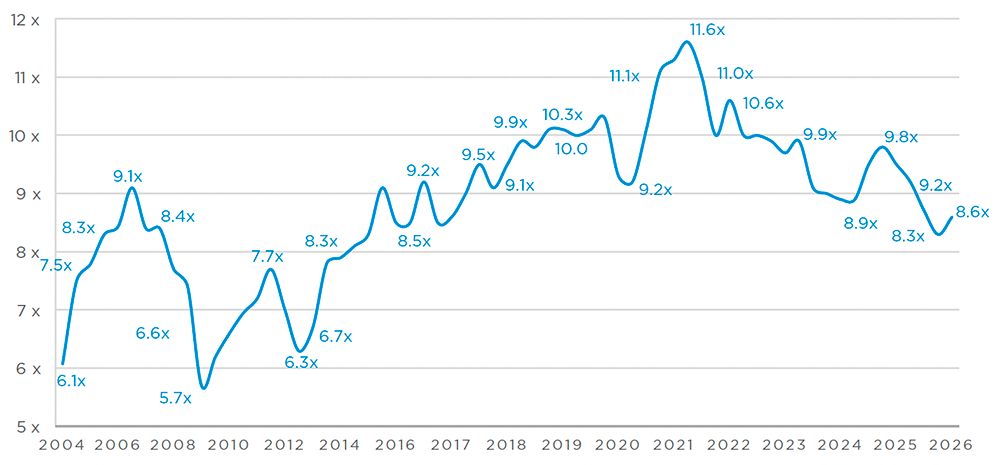
The Argos Index® rose 3.6% in Q1 2026 to 8.6x EBITDA, after a sustained downward trend that had brought the index to its lowest level in over a decade. Both the lower and upper end of the market recovered, but this slight rebound was primarily driven by a recovery in multiples paid by investment funds, which surged to 10.0x EBITDA, while strategic buyer multiples remained broadly stable at 7.8x.
The distribution of transaction multiples showed early signs of normalisation in Q1 2026. The share of deals priced below 7.0x EBITDA declined to 22% from 27% in Q4 2025, and transactions above 15x EBITDA were still at a low level of 6%. The most pronounced pricing stress observed in 2024-2025 may be beginning to ease. Notably, the average EBITDA margin of acquired companies in the sample fell to 12.6% in Q1 2026, versus 13.4% in H2 2025 and 17.4% in S2 2024. This partly reflects the growing share of cyclical and lower-margin sectors in the Q1 sample (energy, construction, transport each up versus prior periods) and contributes independently to explaining multiple restraint outside the PE segment.
Pricing dynamics in Q1 2026 remained shaped by a complex macro-financial backdrop. Long-term interest rates continued to rise(1), despite the ECB holding its deposit rate, with elevated term premia reflecting persistent concerns over sovereign debt sustainability and geopolitical instability. Uncertainty around US trade policy, tariff-related volatility, and (at the end of the quarter) the Iran conflict continued to weigh on investor confidence and valuation assumptions.
Against this backdrop, the Q1 2026 rebound in the Argos Index® appears primarily driven by a composition effect and renewed PE sponsor activity rather than a broad-based improvement in market conditions. The recovery in H2 2025 mid-market M&A, established a firmer foundation heading into Q1 2026, as vendors progressively adjusted price expectations and financing conditions remained broadly available. Whether the Q1 rebound reflects a genuine inflection point or a technically driven bounce will depend on the sustainability of PE deployment and the evolution of the macro environment.
1) The 10y EU bond yields, calculated by the ECB, rose 13bp in Q1 2026 (from 3.21% to 3.34%)
Argos Index® mid-market
Median EV/EBITDA multiple on a six-month rolling basis
Source : Argos Index© mid-market / Epsilon Research
The Argos Index® slight rebound is driven
by investment funds
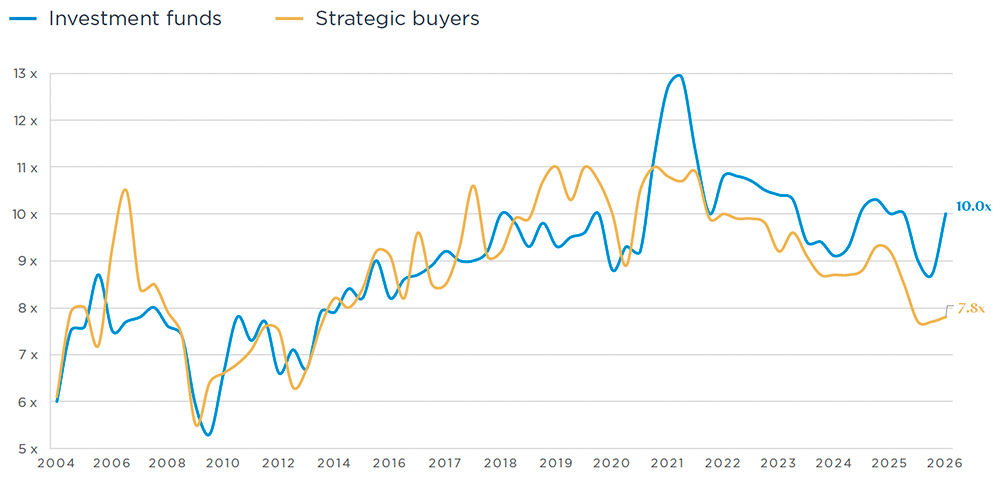
Multiples paid by investment funds surged to 10.0x EBITDA in Q1 2026, up sharply from 8.7x in Q4 2025, back to its H2 2025 level. This rebound reflects a combination of factors: renewed PE sponsor appetite to deploy dry powder after an extended period of restraint, improving financing availability, and a narrowing bid-ask spread as vendor price expectations adjusted throughout 2025. Within the PE sub-sample, transactions are concentrated in healthcare, software and B2B services – sectors commanding structurally higher multiples.
European private equity fundraising declined sharply in 2025, reflecting a challenging exit environment for legacy portfolios. PE funds increasingly turned to alternative liquidity mechanisms – dividend recapitalizations, NAV financings and continuation vehicles – to generate distributions to LPs. In addition, mid-market LBO exit activity regained momentum in H2 2025, with volumes rising 36%(1), enabling sponsors to rebuild deployment capacity. With PE dry powder still at elevated levels(2), the pressure on GPs to deploy capital continued to support deal activity despite the uncertain macro environment.
Multiples paid by strategic buyers remained essentially stable at 7.8x EBITDA in Q1 2026, broadly unchanged from the 7.7x recorded in Q4 2025. Corporates continued to apply strict pricing discipline, concentrating activity on targeted, value-accretive acquisitions. The record-high share of sub-7x transactions observed throughout 2025 has begun to normalise, declining to 22% in Q1. The divergence between PE fund multiples and strategic buyers now at 2.2x, reflects a composition effect as much as a true valuation gap: funds re-entered the market selectively on premium assets in high-multiple sectors, while corporates maintained broad-based acquisition activity across a wider range of sectors and price points.
(1) Source: Epsilon Research / MarketIQ
(2) Global PE buyout dry powder at ~$1.3tn (source: Bain Global Private Equity Report 2026, February 2026)
Enterprise value / historical EBITDA
Source : Argos Index© mid-market / Epsilon Research
A normalisation at the extremes of the distribution
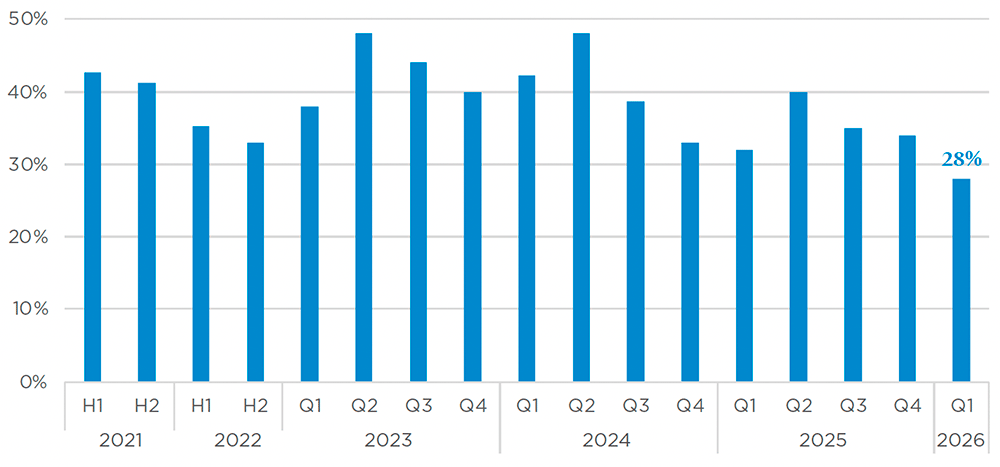
In Q1 2026, the polarisation of the index sample began to ease. Transactions at the extremes accounted for 28% of the sample, down from 34% in Q4 2025, reflecting a decline in both the share of sub-7x transactions and a continued low level of premium deals above 15x EBITDA.
Share of transactions at extreme multiples (15x EBITDA)
Source : Argos Index© mid-market / Epsilon Research
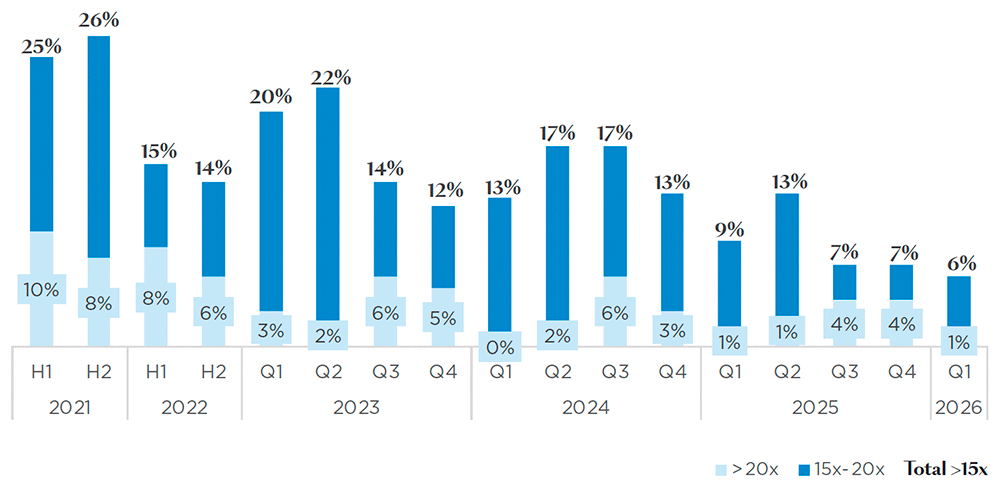
Share of transactions at multiples >15x EBITDA Argos Index® sample
Source : Argos Index© mid-market / Epsilon Research
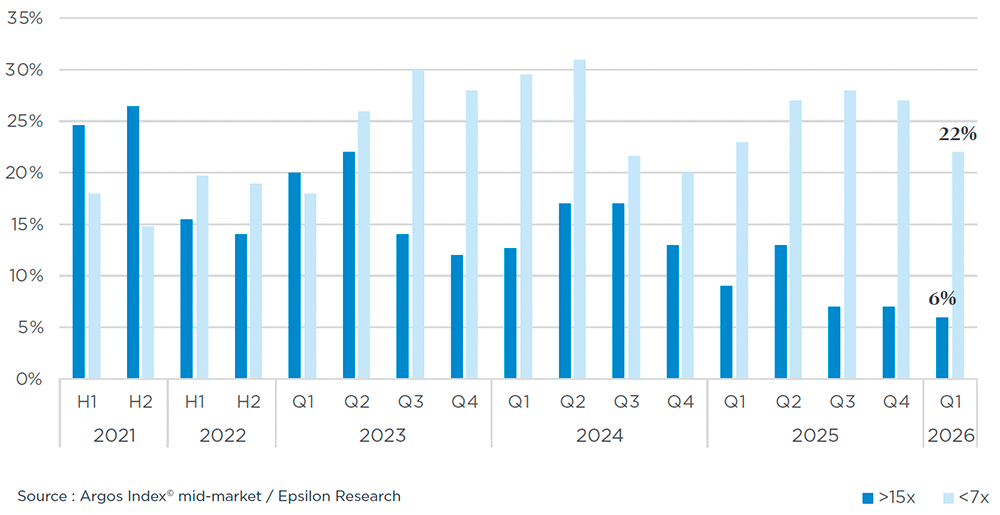
The share of transactions priced below 7.0x EBITDA fell to 22% in Q1 2026 from 27% in Q4 2025, while those above 15x EBITDA declined further to 6%, suggesting a normalisation of the valuation distribution.
Share of transactions at multiples 15x EBITDA Argos Index® sample
Mid-market M&A activity declines
quarter-on-quarter in Q1 2026, though volumes remain above year-earlier levels
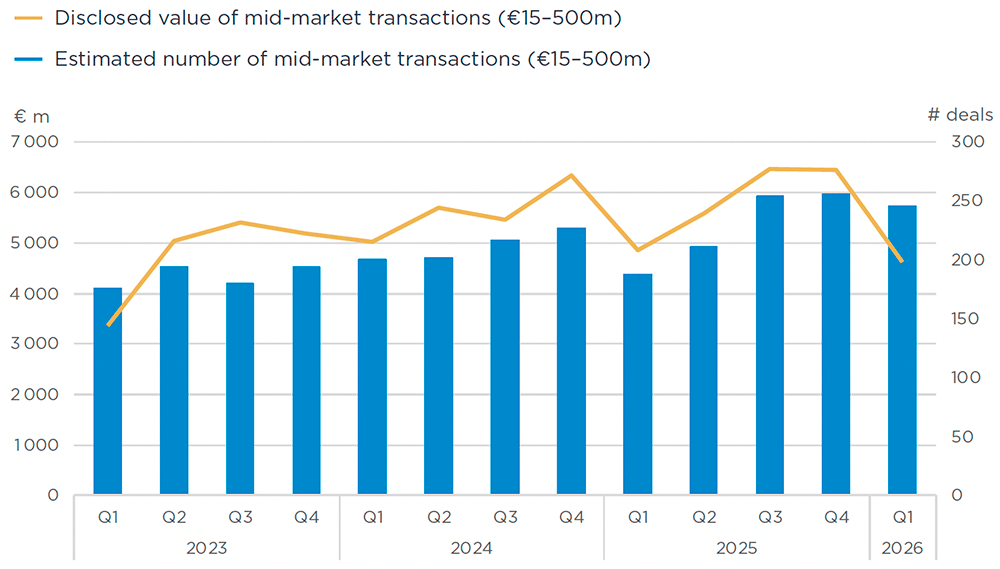
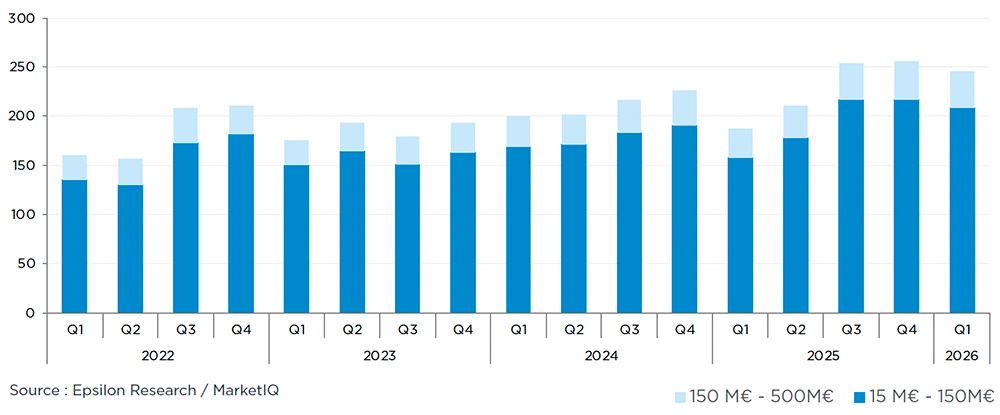
Euro‑zone mid‑market M&A activity declined in Q1 2026 compared to the previous quarter, with estimated deal volumes down 4% from Q4 2025. It follows a strong H2 2025 and should be read against a year-on-year backdrop that remains markedly positive: Q1 2026 activity was 30% higher than Q1 2025. On a rolling basis, the Q4 2025 – Q1 2026 period continued to track at levels not seen since H2 2018. The decline in disclosed transaction value was more pronounced, down 28% from Q4 2025, though this metric is statistically less meaningful given the low and variable disclosure rate.
These eurozone mid-market trends contrast with a record-setting quarter for global M&A, where announced deal value reached $1.2tn(1): the large-cap segment usually recovers before than the mid-market.
The macro backdrop in Q1 2026 was however challenging: GDP growth slowdown(2) and geopolitical uncertainty weighed heavily on sentiment. The Iran conflict drove oil prices above $100 per barrel, raising concerns that central banks would be forced to maintain higher rates for longer, while US tariff policy volatility and political fragility in France continued to cloud the outlook.
(1) Global M&A activity reached $1.2tn in Q1 2026 (third consecutive $1tn quarter), with European M&A up 82% to $307bn and cross-border deals up 47% (source: LSEG / Financial Times, 02.04.2026).
(2) In Q1 2026, eurozone GDP grew by 0.1% quarter-on-quarter, its slowest quarterly pace since Q1 2025 (source: Eurostat, preliminary flash estimate, April 2026)
Eurozone mid-market activity (€15–500m) in volume (# deals) and value
Source : Argos Index© mid-market / Epsilon Research
Eurozone mid-market activity (€15–500m) in volume and value
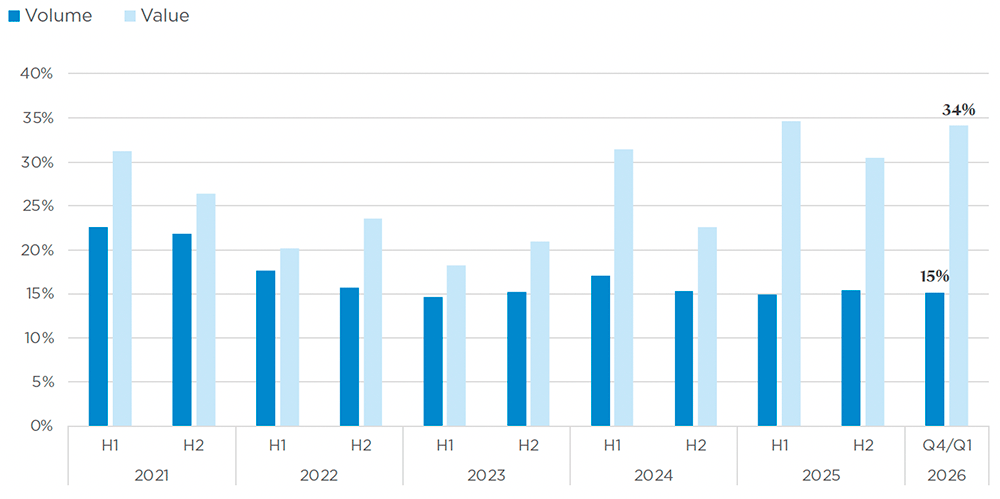
Investment fund activity in the mid-market followed the broader trend in Q1 2026, declining quarter-on-quarter, but remaining 30% above Q1 2025. Their share(1) of mid-market M&A in Q1 2026 remained stable at 15% in deal count. The sharp rebound in fund multiples in Q1 2026, combined with the increase in LBO volumes year-on-year, confirms a meaningful re-engagement of sponsors in primary buyouts after two years of restraint.
(1) Does not include build-ups
Share of LBO in Eurozone Mid-market M&A