Share
Main Conclusions
The payoff year: decarbonisation builds a competitive advantage for European mid-sized companies
Decarbonisation remains a strategic imperative
The climate consensus holds: decarbonisation remains structural, not cyclical

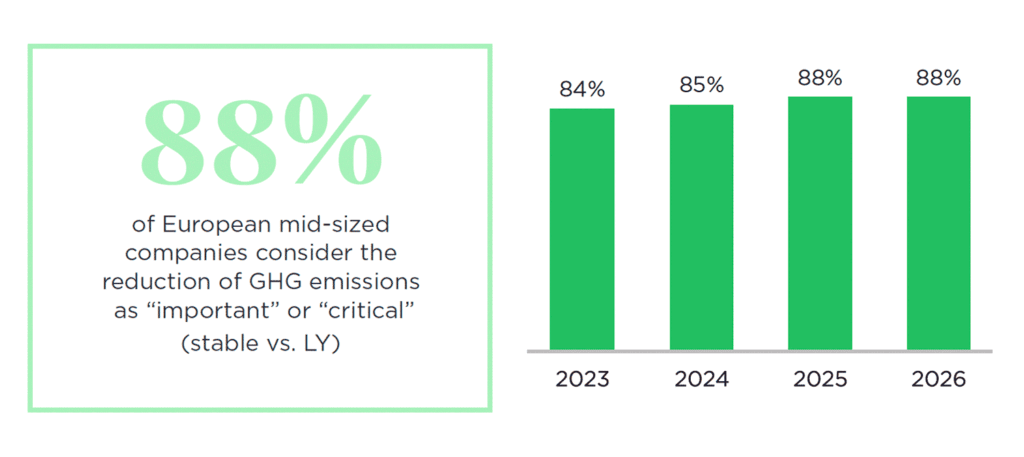
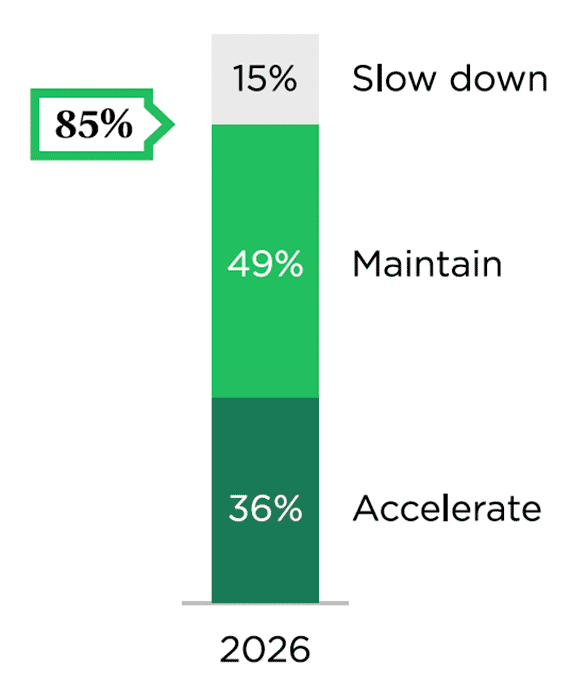
Decarbonisation is not a passing priority. Despite four years of geopolitical turbulence, 88% of European mid-sized companies still consider it critical or important, while 85% expect to maintain or accelerate their transition efforts.
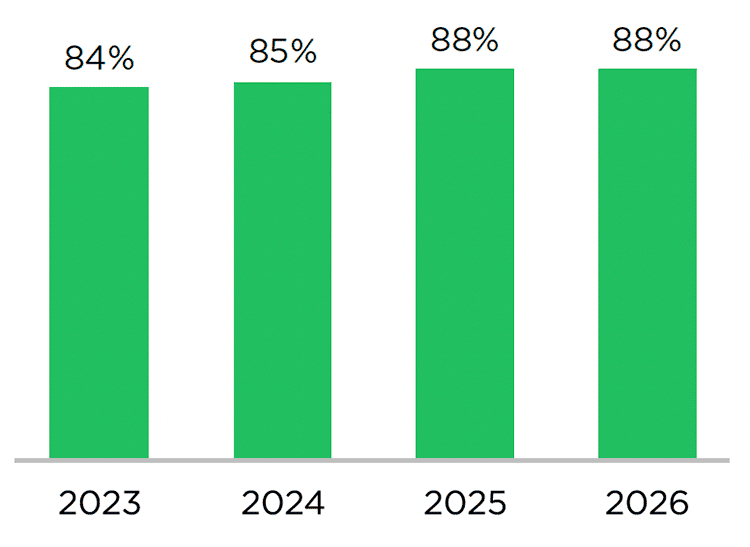
Four years after the launch of this report, European mid-sized companies continue to show a remarkably high level of commitment to decarbonisation despite growing geopolitical, regulatory and economic uncertainty. In 2026, 88% of executives consider reducing GHG emissions an “important” or “critical” priority, up 4 points since 2023.
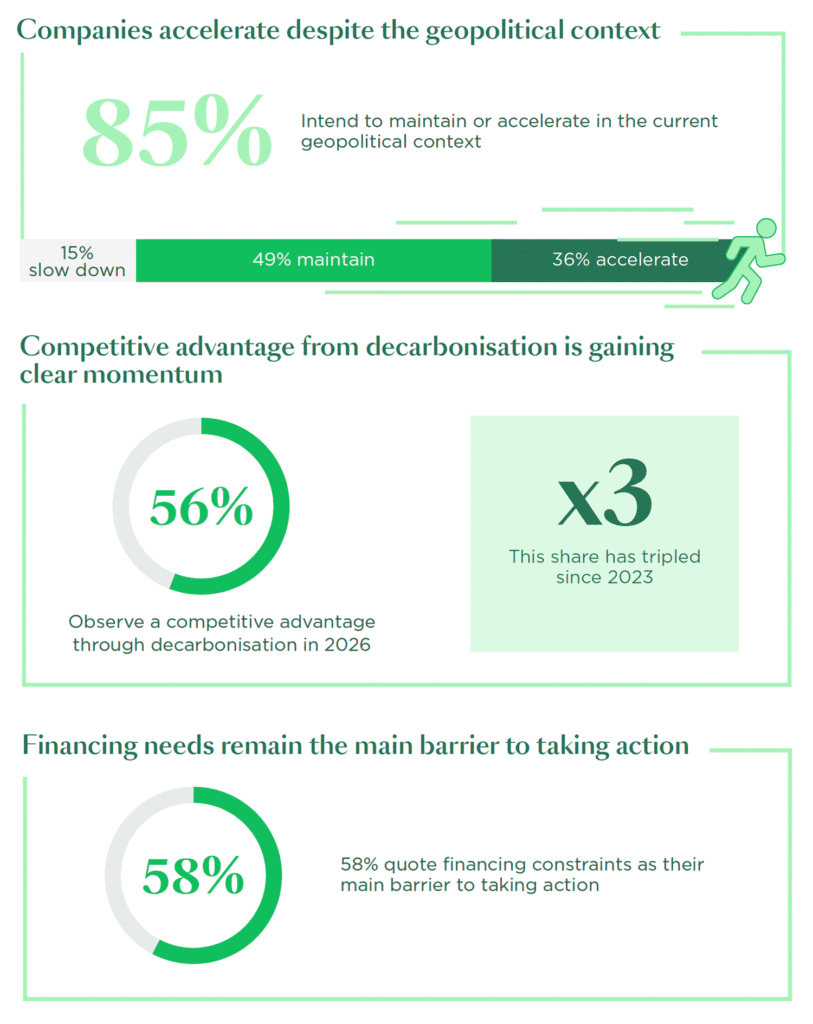
Far from slowing down, transition efforts continue to hold firm in the current geopolitical context: 85% of companies intend either to maintain or accelerate their decarbonisation trajectory, while more than one in three leaders plan to accelerate. This resilience confirms that decarbonisation is no longer viewed as a cyclical sustainability initiative, but as a longterm strategic imperative.
Decarbonisation has settled at the top of the strategic environmental agenda as the #1 environmental objective, cited by 74% of respondents, well ahead of pollution control (59%), circular economy (56%) and climate adaptation (27%). The circular economy is gaining ground, reflecting a broadening of sustainability practices beyond emissions, but decarbonisation remains the first environmental priority cited by respondents across Europe.
Decarbonisation considered “important” or “critical” (in % of respondents)
Impact of the current geopolitical context on European mid-sized companies’ decarbonisation pace (in % of respondents)
Decarbonisation’s opportunity is moving from optimisation to core business transformation

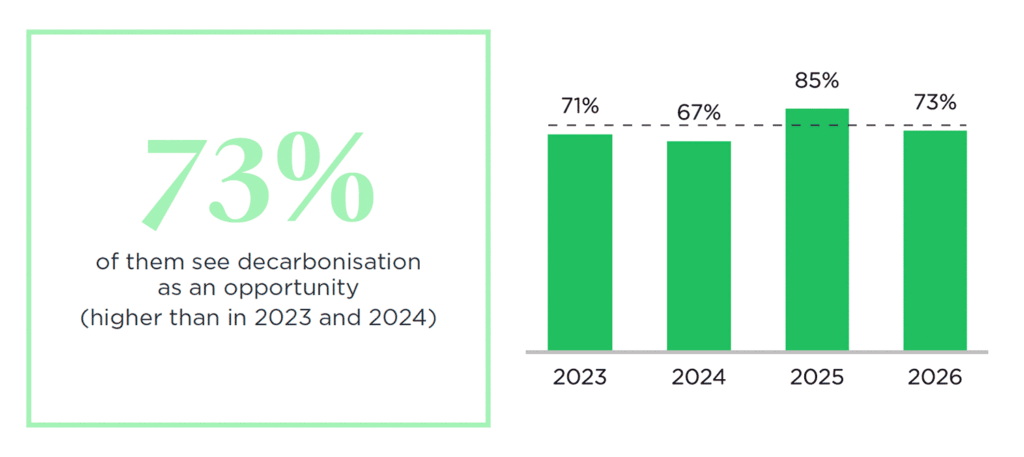
73% continue to see decarbonisation as an opportunity and the most transformative actions are rising. As the transition matures, companies are shifting beyond quick wins toward structural transformation.
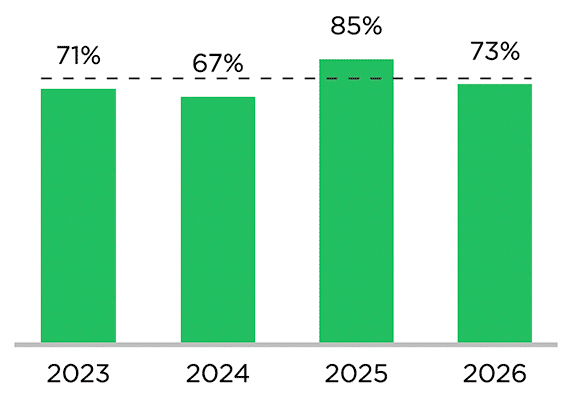
Decarbonisation continues to be viewed as an opportunity by 73% of European mid-sized companies in 2026, confirming a sustained four-year baseline of strong conviction after last year’s peak at 85% reached during the energy crisis. Decarbonisation is more perceived as a risk or constraint this year (+6 points each vs. 2025) as companies form a more grounded view of how and when decarbonisation pays back.
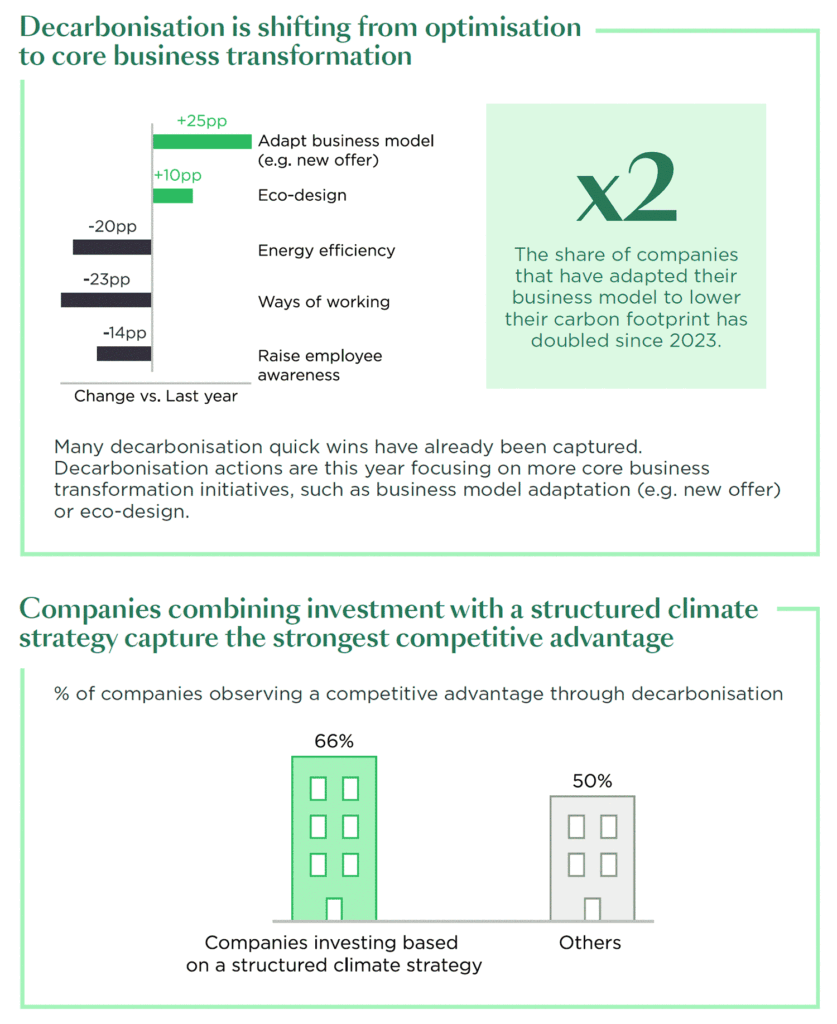
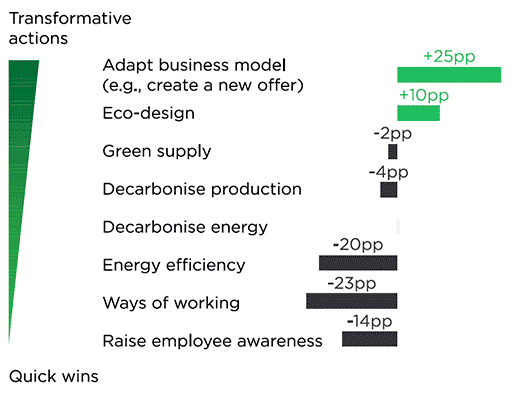
The nature of the opportunity is evolving. Many operational quick wins have now been implemented, pushing companies towards more transformative initiatives embedded in the core business. 54% have adapted their business model (2x vs. 2023, e.g., created a new offer) and 58% have deployed eco-design (+11pp vs. 2025) to lower their carbon footprint, signalling a shift from incremental optimisation to strategic differentiation.
Decarbonisation viewed as an opportunity (% of respondents)
The value equation is maturing as well. Only 13% of companies report having secured a short-term price premium, confirming that decarbonisation is increasingly viewed through a longterm value creation lens rather than an immediate margin play. Leading companies are investing to strengthen resilience, reinforce market positioning and build a lasting competitive advantage.
As the transition matures, this mediumterm orientation is likely to widen the gap already opening. Leaders have put quick-win actions behind them and are now investing in structural transformation. For those yet to start, the catch-up cost is rising. The question is no longer whether to invest, but whether the investment is directed toward the right transformative levers, and how fast companies can act.
Decarbonisation actions (change in % of respondents, 2025-2026)
Eco-design: optimising consumer value, cost and sustainability
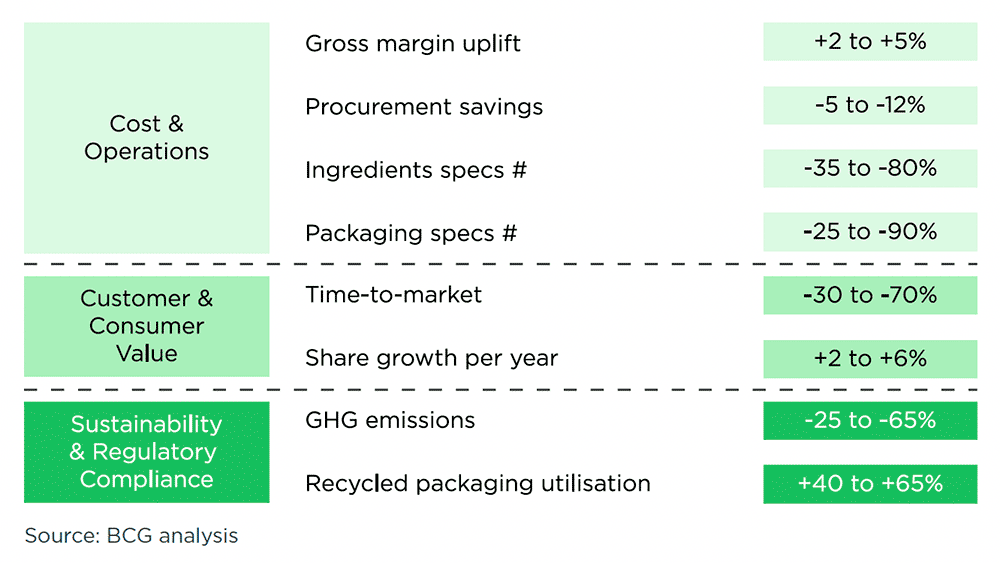
Eco-design re-engineers products from the ground up – across materials, manufacturing processes, packaging, and end-of-life – to deliver equal or superior performance with a lower environmental footprint
Eco-design has gained significant traction among European mid-sized companies, with adoption reaching 58% (+11pp vs. 2025), driven by four converging pressures: regulatory acceleration (e.g., PPWR, CSRD, EPR — 70% cite regulation as their #1 decarbonisation driver), B2B client pull (cited by 61%, as mid-sized firms generate c. 60% of larger groups’ Scope 31), raw-material volatility and rising consumer expectations around health and traceability.
Leading firms are moving from tweaks to integrated product redesign, treating consumer value, cost and sustainability as joint optimisation. Examples include Veja (recycled plastics, wild rubber), Frosch (closed-loop recycled PET) and Mustela (refillable, biosourced). Eco-design has become a margin and growth lever (e.g., protecting costs, unlocking B2B contracts) rather than a CSR standalone initiative.
Decarbonisation viewed as an opportunity (% of respondents)

(1) Source : Eurobarom.tre PME de la Commission Europ.enne (2022)
Companies capturing the strongest competitive advantage are those combining investment with a structured climate strategy

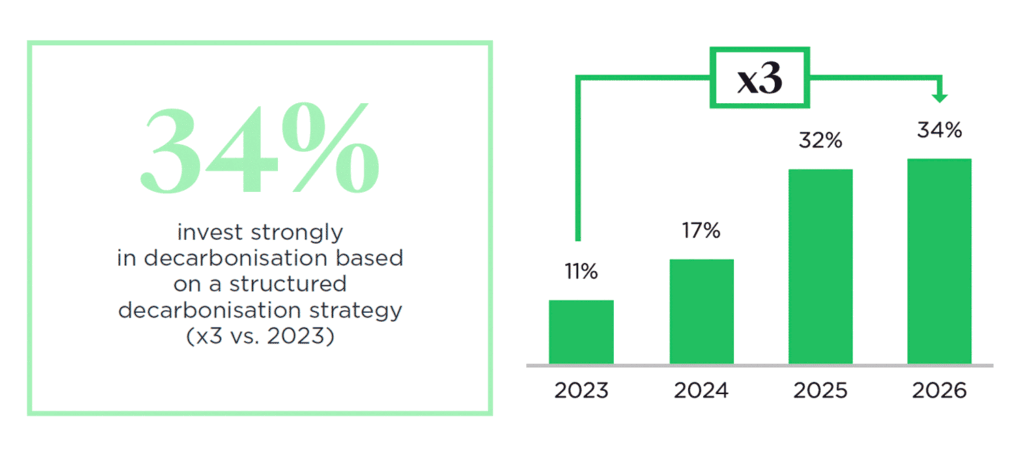
A competitive advantage from decarbonisation is now observed by 56% of European mid-sized companies (3x vs. 2023). 34% invest significantly in decarbonisation initiatives based on a structured climate strategy (3x vs. 2023) – and these are the companies capturing the strongest competitive advantage
4 paths to decarbonisation
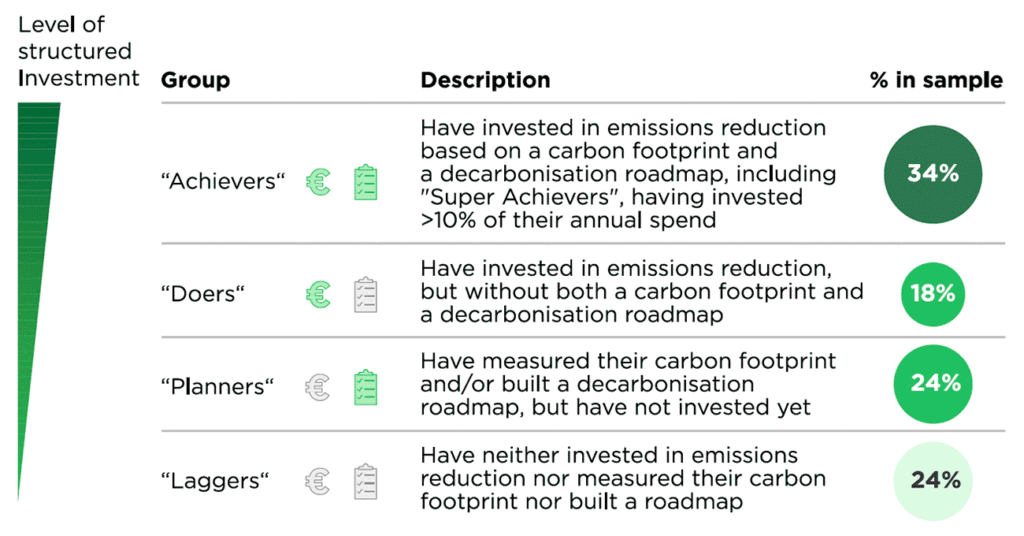
European mid-sized companies are intensifying their investments: 51% invest significantly (+13pp vs. 2023) and 34% invest in a structured way based on a roadmap and carbon footprint measurement (3x vs. 2023). Investment level is supported by a business case that is strongly materialising: 56% already observe a competitive advantage, a figure that has tripled since 2023. Companies now observe benefits which are core to business performance such as energy and cost efficiency (cited by 70%) with a direct P&L impact, addressing new
markets and gaining market share (48%) and better financing conditions (45%). Companies that capture the strongest competitive advantage are those combining investment with a structured climate strategy (“Achievers”): 66% report a competitive advantage vs. 44% for Laggers which rely only on operational initiatives without dedicated investment. This rises to 77% when the structured approach is combined with significant capex (>10% of annual spend, for “Super Achievers”).
Competitive advantage observed (in % of respondents)
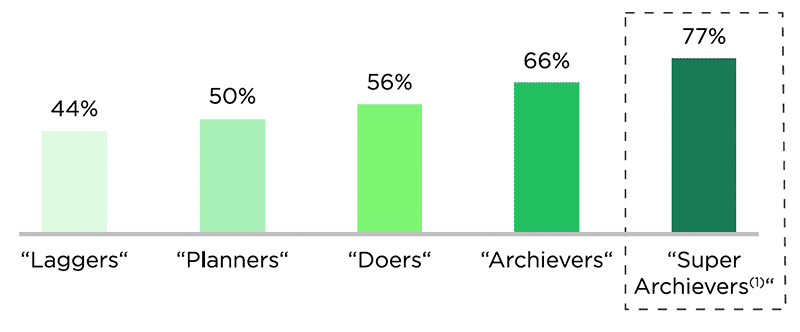
(1) Super Achievers are companies investing >10% of annual spend based on a structured climate strategy.
Please refer to the “4 paths to decarbonisation” table for definitions.
Fund-backed companies lead on all dimensions
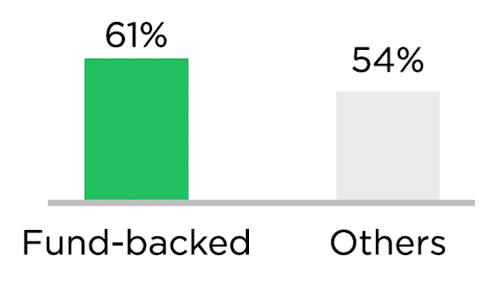
Companies backed by investment funds demonstrate a more advanced decarbonisation journey. They invest and structure more their approach with 40% of Achievers (+8pp vs. others). They are also more likely to undertake transformative actions, with 61% changing their business model to integrate decarbonisation (+8pp vs. others). As a result, 95% have achieved or expect a competitive advantage through decarbonisation. Private equity ownership brings the structure and investment required to turn decarbonisation into a value-creation level.
Invested in decarbonisation based on a structured climate strategy (Achievers)
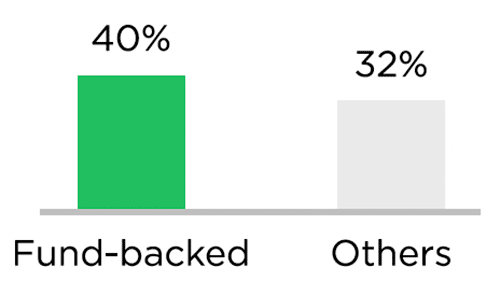
Adapted its business model to lower its carbon footprint
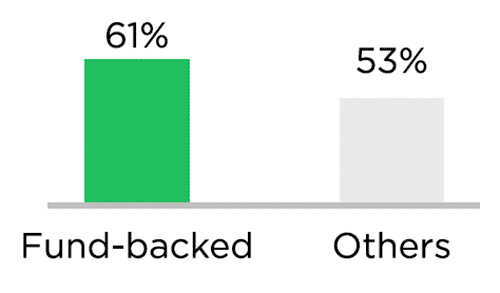
Observed a competitive advantage through decarbonisation
Transport & logistics: structure turns decarbonisation into competitive advantage
Transport & Logistics is among the most advanced sectors for decarbonisation, with 40% of companies classified as Achievers. It has also recorded one of the largest increases in competitive advantage associated with decarbonisation (56% vs. 35% in 2025). The sector exhibits the strongest “structure premium” as companies investing with a structured roadmap report a competitive advantage 26pp more often than those without.
Regulation is accelerating the pressure to decarbonise with CBAM (carbon cost on EU imports from 2026) and FuelEU Maritime (marine fuel limits since 2025). Technology remains a challenge, cited by 35% of respondents (+7pp vs. average), amid the slow rollout of electrically-chargeable trucks (3.6% of new EU registrations) and the easing of EU HDV CO₂ targets in July 2025.
Financing needs remain the main barrier to taking action

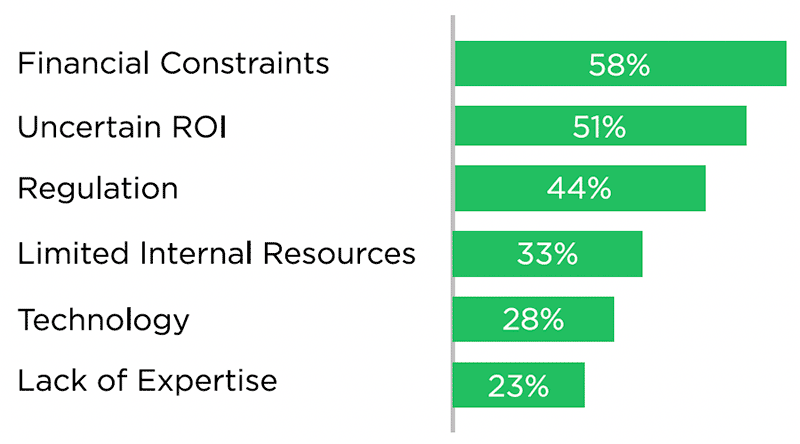
Financial constraints remain the main barrier to green transition, with 58% of European mid-sized companies citing lack of financing as a key headwind.
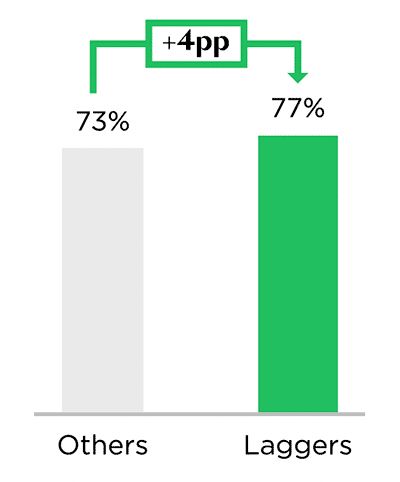
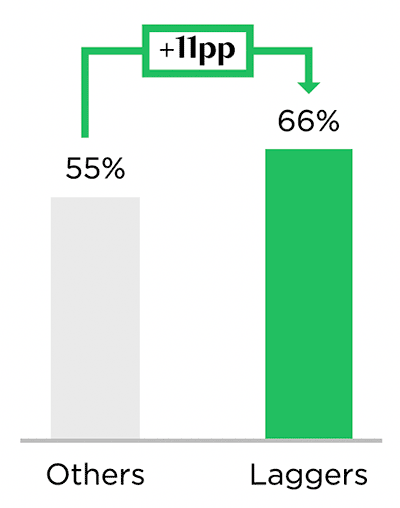
This challenge is particularly true among “Laggers” (companies that have neither invested nor structured their decarbonisation approach). They are convinced by the business case of decarbonisation as 77% of them see the transition as an opportunity. But more than two-thirds rank lack of financing among their top 3 barriers (+11pp vs. other companies), and none has established a formal roadmap. Companies lagging behind are not held back by climate skepticism but lack financial support and strategy to gain the competitive advantage of decarbonisation.
Decarbonisation viewed as an “opportunity” (in % of respondents)
Financial constraints cited in top 3 headwinds (in % of respondents)
While regulatory complexity remains a significant barrier (44%), it is declining (-6pp vs. 2025) in the context of Omnibus simplification agenda. However, companies limiting their approach to regulatory compliance risk missing the broader competitive advantage of decarbonisation. As regulatory requirements narrow, indirect pressure through Scope 3 cascades remains one of the main binding channels.
Headwinds to decarbonisation for mid-sized companies (in % of respondents)
Without investments and strategic support, a significant part of the European mid-market risks remaining stuck in a compliance-driven transition, rather than converting climate action into competitive advantage. The gap between those who can and those who cannot is widening, and it is driven by access to capital and structure, not by ambition.
The Omnibus simplification reduces administrative pressure but also dilutes incentive
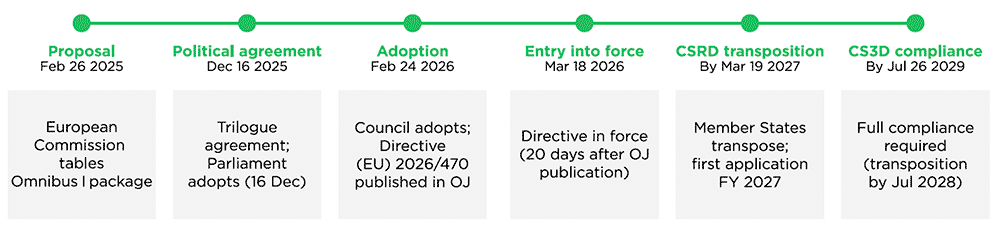
The Omnibus I Directive reduces the scope of both flagship EU sustainability texts. The CSRD now applies only to firms with 1,000+ employees and €450+ million annual net turnover. The CS3D applies only to EU companies with 5,000+ employees and €1.5+ billion net turnover, with the climate transition plan obligation removed and the EUlevel civil liability regime replaced by national-law liability capped at 3% of net worldwide turnover. Most respondents in the survey now sit outside the new direct mandatory scope. A new value-chain cap further limits indirect pressure: companies with 1,000 employees or fewer are no longer required to provide reporting partners with information beyond voluntary standards. Indirect pressure from large CSRD-compliant customers via Scope 3 cascades remains one of the main the binding channels.

Decarbonisation remains a strategic imperative across all geographies
Importance of decarbonisation is broadly shared across geographies. However, the conversion into action and competitive advantage varies between geographies, depending on structural and cultural differences (e.g. energy mix, level of decarbonisation maturity).
France – Strongest commitment, but a more challenging path to competitive differentiation in a more mature market
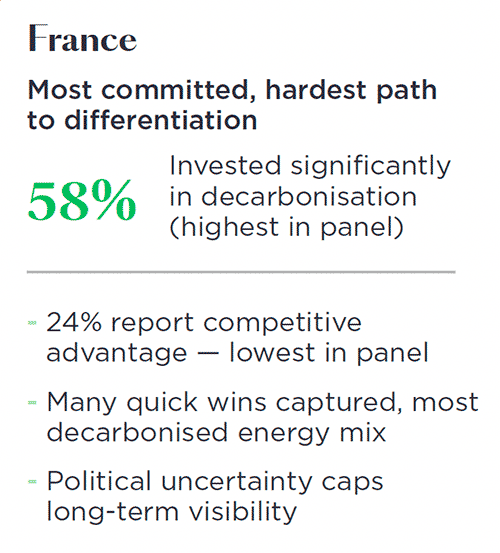

France stands out as the most committed market in Europe, with 92% of mid-sized companies considering decarbonisation a strategic priority and 58% already investing significantly in the transition — the highest level across surveyed countries. Yet only 24% report seeing a clear competitive advantage from these efforts. Having started earlier and benefiting from one of Europe’s most decarbonised energy mixes, French companies appear to have already captured many of the initial “quick wins”. Creating further differentiation now requires deeper, more transformative changes embedded in core business models — a step made more challenging by political uncertainty and reduced visibility on long-term public support.
Germany — Industrial momentum despite geopolitical headwinds
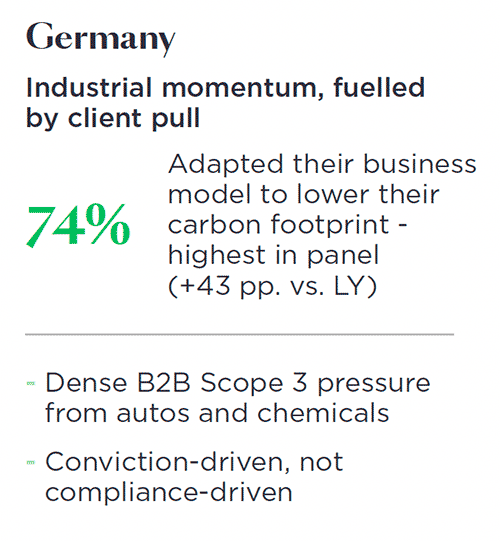

Amid political upheavals, 40% of German mid-sized companies are accelerating the transition. Business logic appears embedded in the industrial fabric to sustain momentum. The hidden engine is client pull, cited by 69% of German accelerators (Europe’s highest), reflecting dense B2B supply chain pressure from automotive, chemicals and machinery corporates. German mid-sized companies are not only decarbonising because regulators tell them to, but also because their customers ask. This is a more durable foundation than compliance alone. The challenge ahead is shifting from regulation- to conviction-driven action: firms yet to internalize the competitive case may slow as the mandate weakens.
Italy — Solid momentum in Europe, backed by government incentives
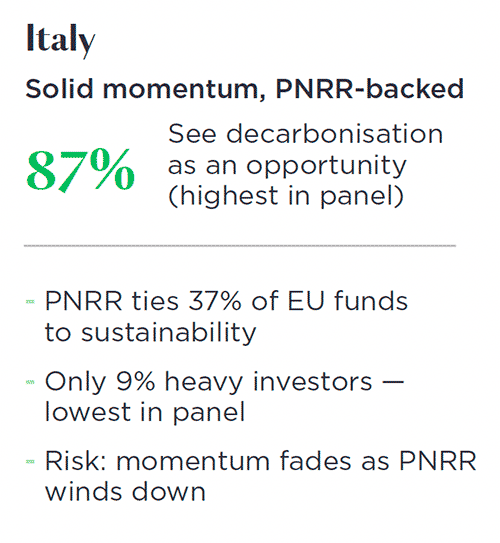

Italy emerges as Europe’s most optimistic market on paper: 87% of midsized companies see the transition as an opportunity and 47% are accelerating, the highest acceleration rate in Europe (+15pp vs 2025). Yet only 9% invest heavily (>10% of annual spend), the lowest in Europe. The gap between conviction and capital deployment is the widest of any market surveyed. That gap reflects an eroding policy environment: PNRR resources for mid-sized companies’ decarbonisation were reallocated mid-2025, and the main instrument, Transizione 5.0, was depleted by November. Companies applying afterwards were left awaiting potential additional resources and repeated regulatory revisions have further undermined investment visibility.
Benelux — High maturity on decarbonisation, with financial limitations to unlock further upsides
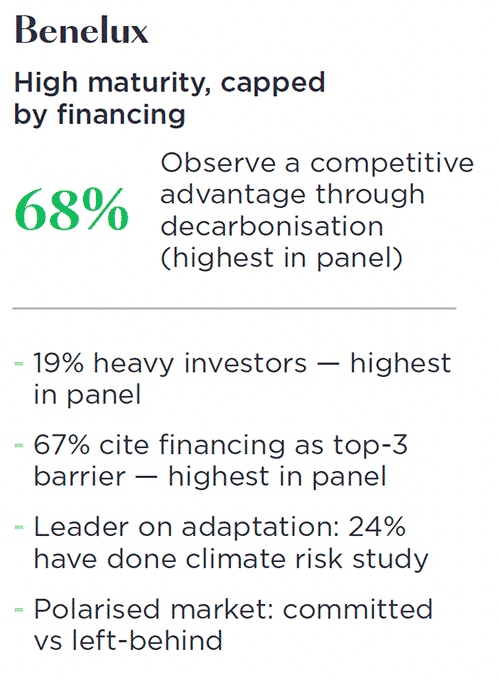

Benelux is Europe’s most polarised market: it combines the lowest overall investment rate (47%) with the highest share of heavy investors (19%) and competitive advantage rate (68%). For those who have committed deeply, the returns show. The ceiling is primarily financial: 67% cite lack of resources as their main barrier (highest level alongside the UK). Unlocking the next wave is less about conviction than capital access. On adaptation, Benelux leads: 24% have conducted a full climate risk study (highest share in Europe), while only 21% report taking no action — reflecting years of voluntary ESG reporting and a governance culture serious about physical risk disclosure.
United Kingdom — Under geopolitical and regulatory pressure, slowdown on decarbonisation
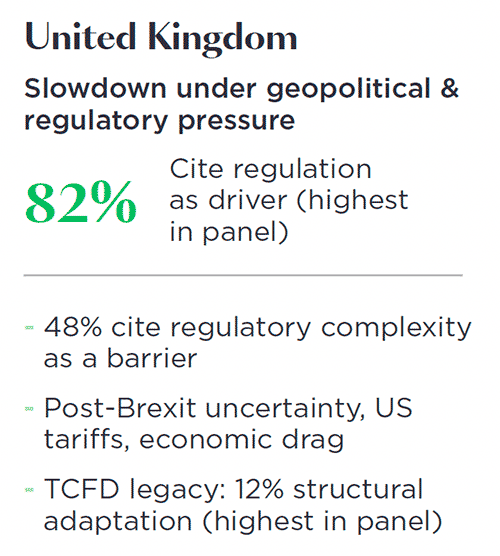

The UK has Europe’s highest slowdown rate: 23% of mid-sized companies say the geopolitical context is slowing their transition, under post-Brexit regulatory uncertainty, US tariff exposure and economic drag. The regulatory paradox is unique to the UK: regulation is simultaneously the strongest decarbonisation driver (82%, Europe’s highest) and a significant top-3 barrier (48% cite regulatory complexity). The positive outlier is adaptation: 12% deploy structured preventive measures (highest in panel), a downstream effect of mandatory TCFD reporting for large UK-listed firms since 2022, which has cascaded through supply chains, showing how disclosure mandates build durable supply-chain capability beyond compliance.
Going Further
Adaptation: the next frontier and today’s blind spot despite repeated climate events
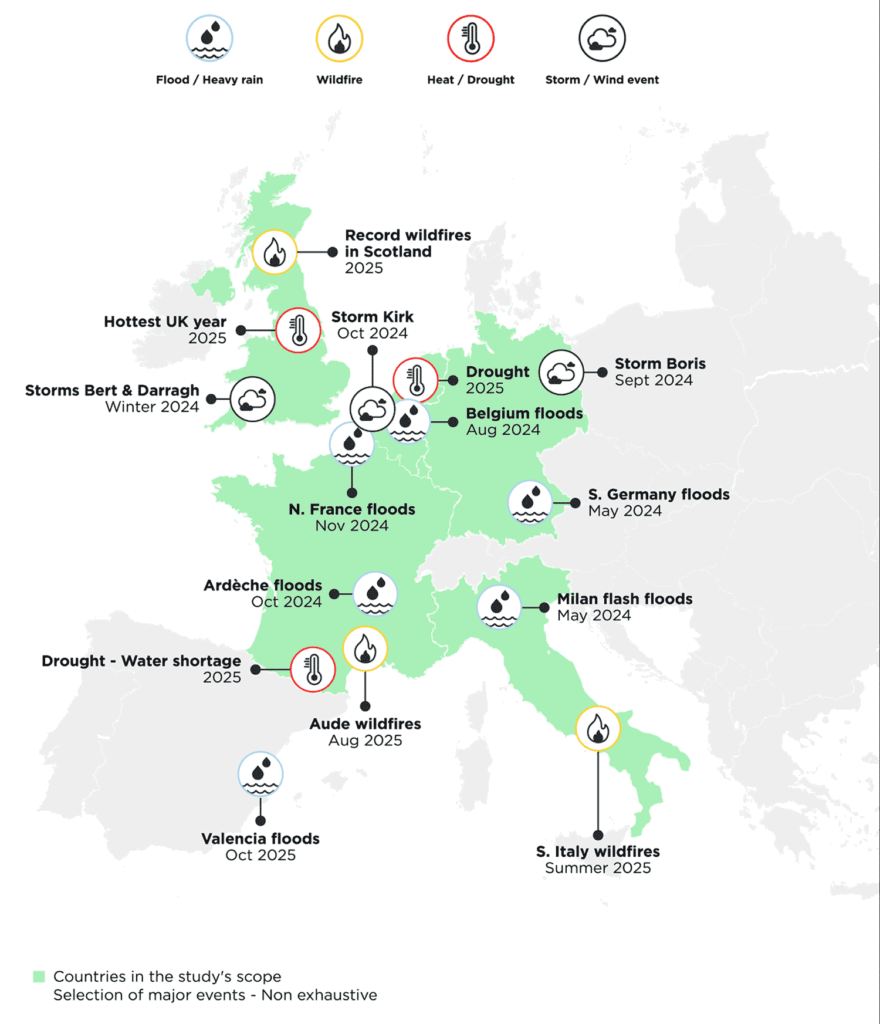
63% of mid-sized companies have experienced climate events in the last 3 years and 15% with severe impacts. But only 8% have deployed structured preventive adaptation measures. Adaptation is reportedly overlooked by mid-sized companies despite proven impact of externalities.
Climate events are no longer rare or distant: 63% of companies have faced one in three years, 15% with severe impact, agri-food and chemicals mostly exposed, but no sector is immune. Impacts can be of different nature (e.g. production stoppage, assets damage, supply chain disruption) and affect business in multiple ways, both the top and bottom lines. As key players in this ecosystem, mid-sized companies must consider adaptation both as an activity protection imperative and a differentiation lever through both resilient operations and value proposition. For instance, recent profit warnings from major OEMs have illustrated how a localised weather event at a tier-2 supplier (e.g. flooding disrupting aluminium supply) can cascade into significant production losses and material impacts on both topline and bottomline.
Climate exposure vs. adaptation response (global and by sector) (in % of respondents)
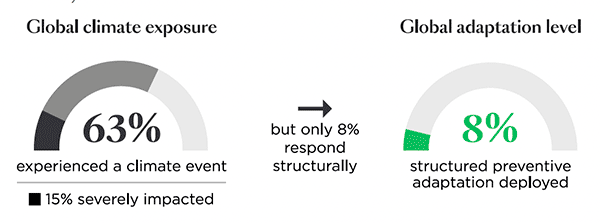
Yet preparation lags: only 8% have deployed structured adaptation and 27% cite adaptation as an environmental objective (vs. 74% for decarbonisation). Only 17% have run a full climate risk study and 38% do not know their exposure. The mitigation–adaptation gap is striking.
Climate exposure vs. adaptation response (global and by sector) (in % of respondents)
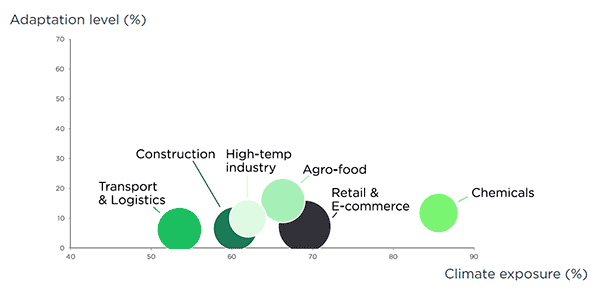
Affected by severe droughts in Southern Europe and floods such as Valencia 2024-episode, 2/3 of agrifood businesses have experienced climate events in the last 3 years. They are the most advanced although only 16% of companies have implemented structured adaptation. France shows the largest gap between physical exposure and adaptation response in the panel: only 34% have taken any adaptation action (the lowest in Europe) despite physical exposure that is growing. The UK, by contrast, leads on structured preventive adaptation (12%), a downstream effect of mandatory TCFD reporting requirements cascading through supply chains.
Climate exposure vs. adaptation response (global and by sector) (in % of respondents)