Share
Main Conclusions
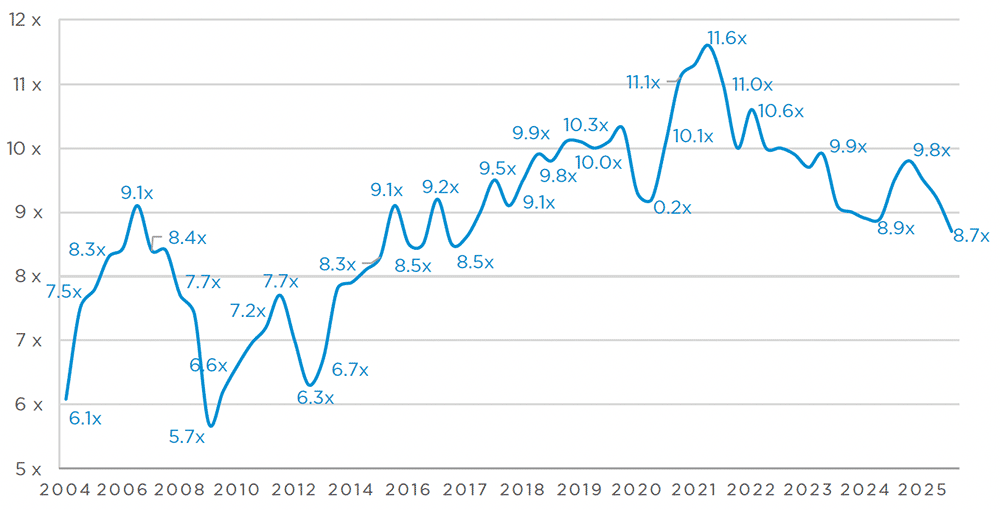
- 1. The Argos Index® continues its downward trend to 8.7x EBITDA, at its lowest level since 2017.
- 2. The Argos Index® is pulled down by both strategic buyers and investment funds.
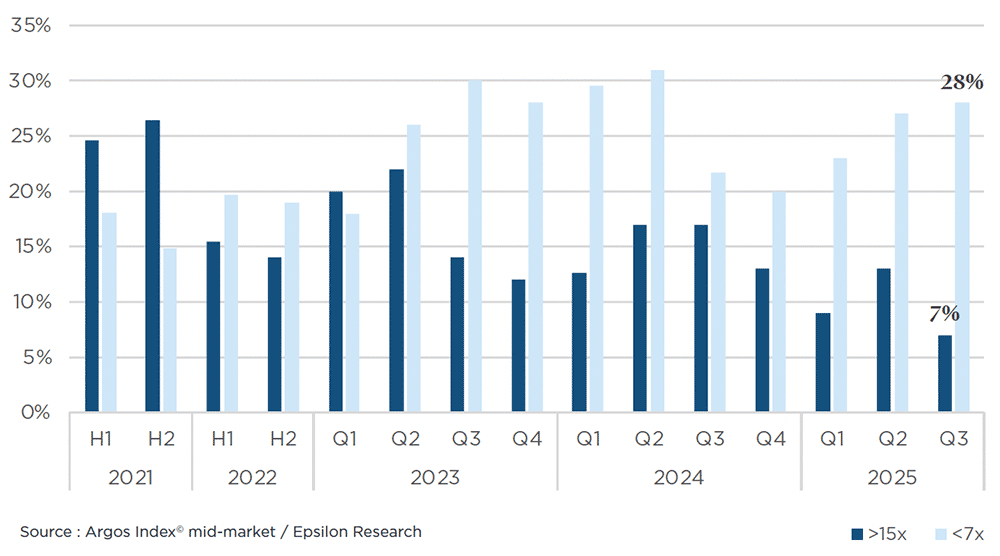
- 3. The share of deals priced below 7.0x EBITDA rose to 28%, while those above 15x fell to a record‑low 7%, underscoring persistent downward pressure on pricing.
- 4. Limited recovery of the M&A mid-market activity.
The Argos Index® continues its downward trend
to 8.7x EBITDA, at its lowest level since 2017
The Argos Index® fell 5.4% in Q3 2025 to 8.7x EBITDA, its lowest level since Q1 2017. Valuations decreased across all segments of the mid‑market, with the lower mid‑market seeing the sharpest drop (−10%). The share of deals priced below 7.0x EBITDA rose to 28%, while those above 15x fell to a record‑low 7%, underscoring persistent downward pressure on pricing.
This decline has continued despite a gradual increase in M&A activity that began in 2024 and was briefly interrupted in early 2025 by the U.S. tariff shock. Activity recovered as the anticipated economic deterioration did not materialize, supported by lower‑than‑expected inflation, strong corporate earnings, and optimism about AI’s impact on growth and valuations.
Pricing remained under pressure from higher long‑term rates(1) despite ECB deposit‑rate cuts. The rising term premia reflect concerns about the durability of growth, longer‑term impact of Trump’s policy and ongoing geopolitical tensions, as well as heavier expected issuance (notably Germany) and political/fiscal concerns in France. Euro‑zone banks tightened corporate credit standards in Q3(2), limiting available leverage(3) and reducing buyers’ bid capacity, with German lenders leading the way on fears over the economic outlook and tariffs.
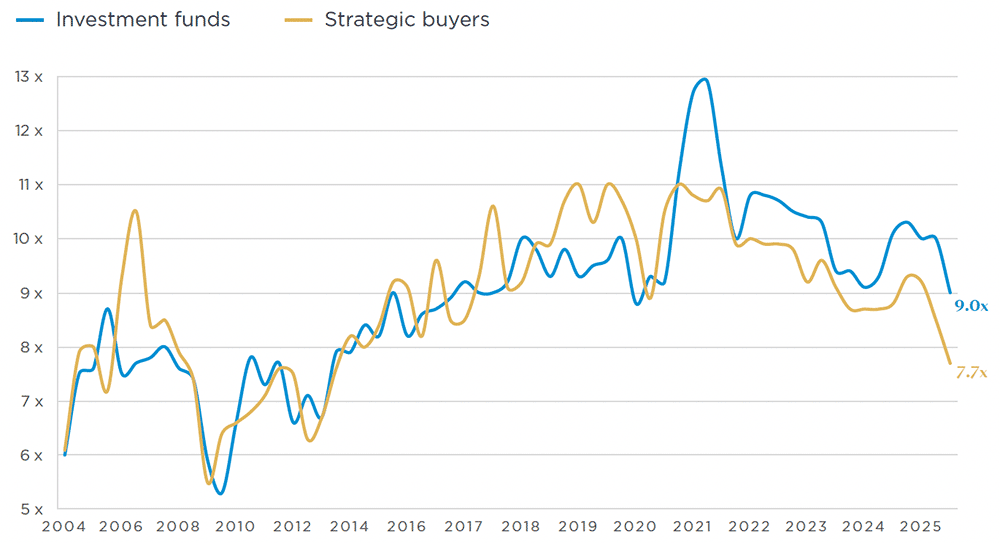
Both multiples paid by investment funds (to 9.0x EBITDA) and strategic buyers (to 7.7x) dropped in Q3. With PE exits up 12.5% in the quarter, sellers—especially funds—have gradually adjusted price expectations, narrowing the bid‑ask spread. The drop in the Argos Index® reflects this repricing process, which is helping M&A activity to recover.
(1) The 10y EU bond yields, calculated by the ECB, was up 14bp in Q3 (from 3.01% to 3.15%), and 41bp since 1st Jan. 2025
(2) Source: ECB Quarterly Survey
(3) ECB guidance to banks on leveraged transactions (2017) raises the cost of bank financing for highly leveraged deals (with total debt/EBITDA >6x). In the ECB’s 2024 SREP decisions (Dec. 2024), the number of banks subject to increased capital on account of the risk of excessive leverage more than doubled.
Argos Index® mid-market
Median EV/EBITDA multiple on a six-month rolling basis
Source : Argos Index© mid-market / Epsilon Research
The Argos Index® is pulled down by both strategic buyers and investment funds
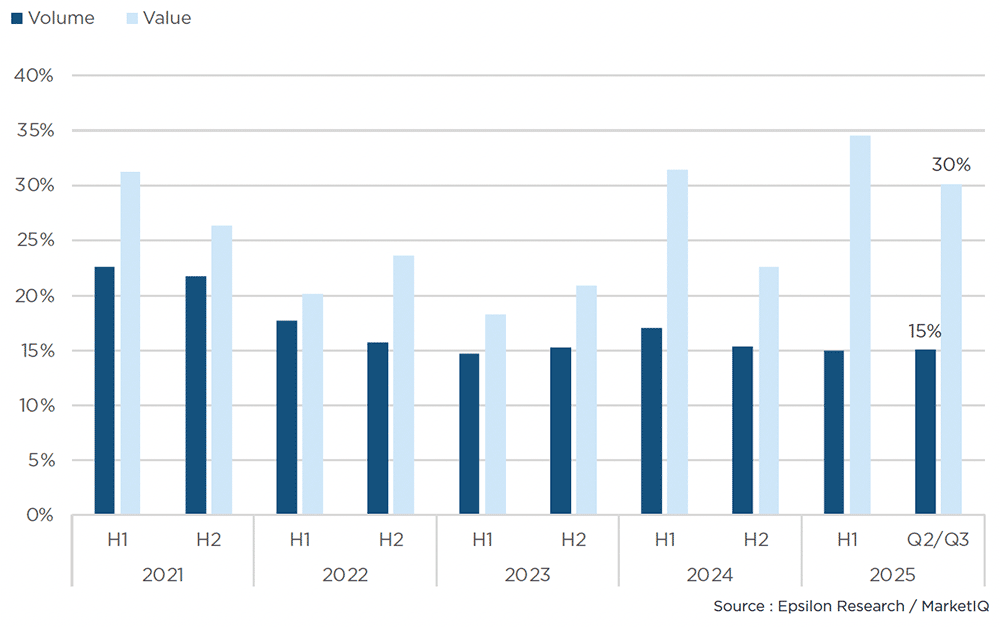
Multiples paid by investment funds are down 10% to 9.0x EBITDA in Q3, close to their long term average of 8.8x. With weaker fundraising (1) and LPs pushing for distributions, sponsors prioritized downside‑protected returns over “winning at any price”, resulting in tighter valuations. As the bid‑ask spread narrowed, PE exits rose 12.5% in the first three quarters of 2025, enabling investment funds to monetize older portfolio assets. Mid‑market LBO activity tracked the broader M&A market, with its share of total deal volume steady at a low 15%.
Multiples paid by strategic buyers continued their decline, reaching 7.7x EBITDA in Q3 (12% below their long term average). Large corporates pursued opportunistic acquisitions at lower multiples, with a record share of deals priced below 7.0x EBITDA. At the same time, growing public equity markets since early 2025(2) supported high‑premium strategic transactions, particularly in sectors adapting to AI and digital transformation.
(1) European private equity fund raising is down 33.3% over the first 3 quarters 2025, from 2024’s record (Source: Pitchbook in VRC European Private Market Update: Q3 2025)
(2) The EURO STOXX TMI Small Index is up 2.5% in Q3 and 18.4% since 1st Jan. 2025
Enterprise value / historical EBITDA
Source : Argos Index© mid-market / Epsilon Research
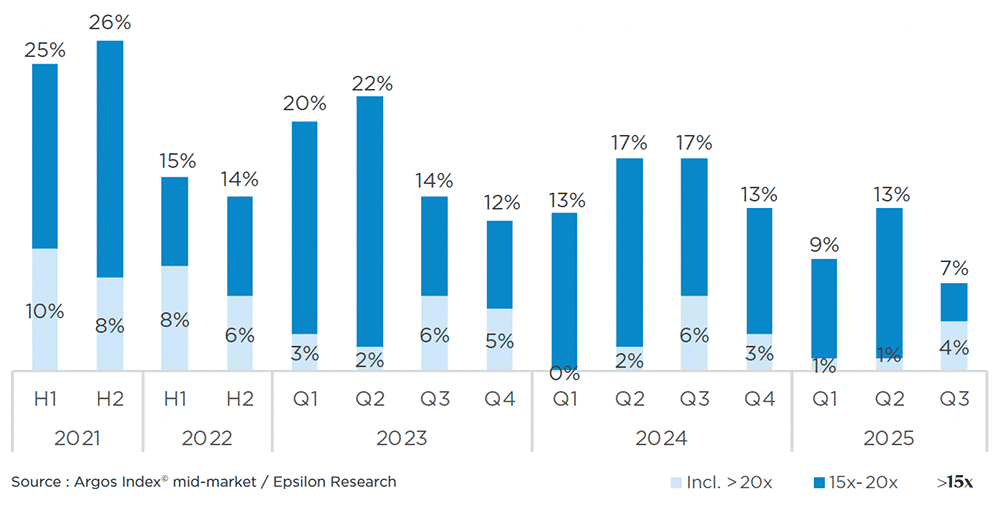
Record lows of transactions above 15x EBITDA
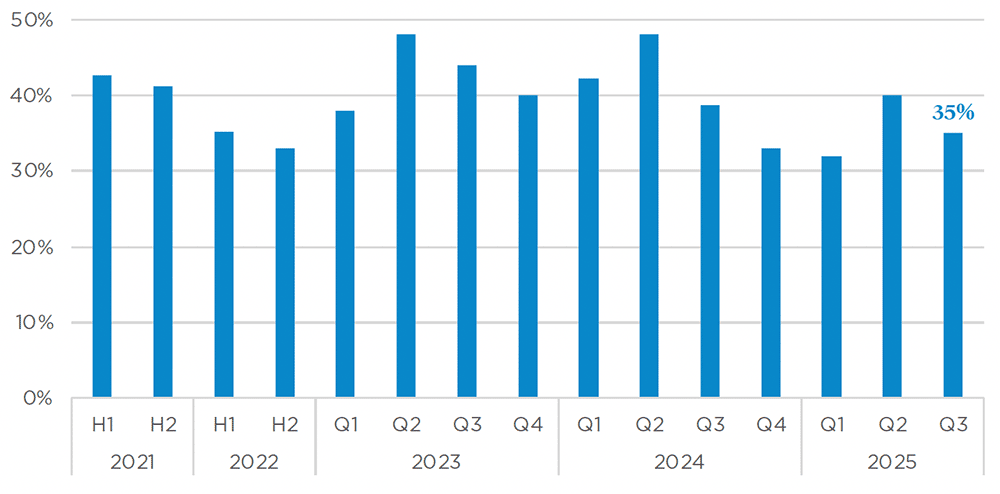
In Q3 2025, transactions at the extremes accounted for 35% of the index sample, reflecting a record‑low share of >15x deals alongside a higher proportion of low‑end transactions priced below 7.0x EBITDA.
Share of transactions at extreme multiples (15x EBITDA)
Source : Argos Index© mid-market / Epsilon Research
Share of transactions at multiples >15x EBITDA Argos Index® sample
Transactions priced below 7.0x EBITDA account for 28% of the sample, highlighting persistent downward pressure on valuations.
Share of transactions at multiples 15x EBITDA Argos Index® sample
Limited recovery of the M&A mid-market activity
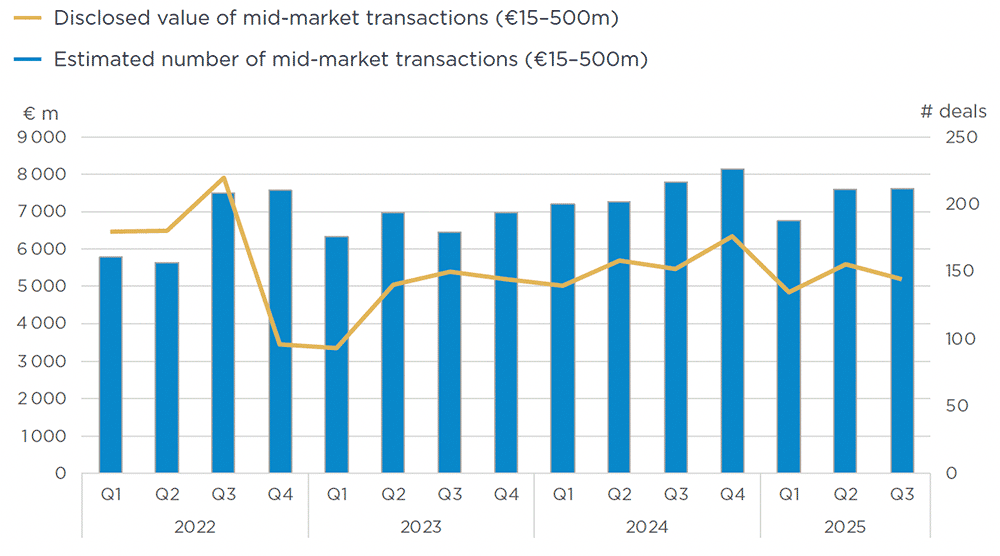
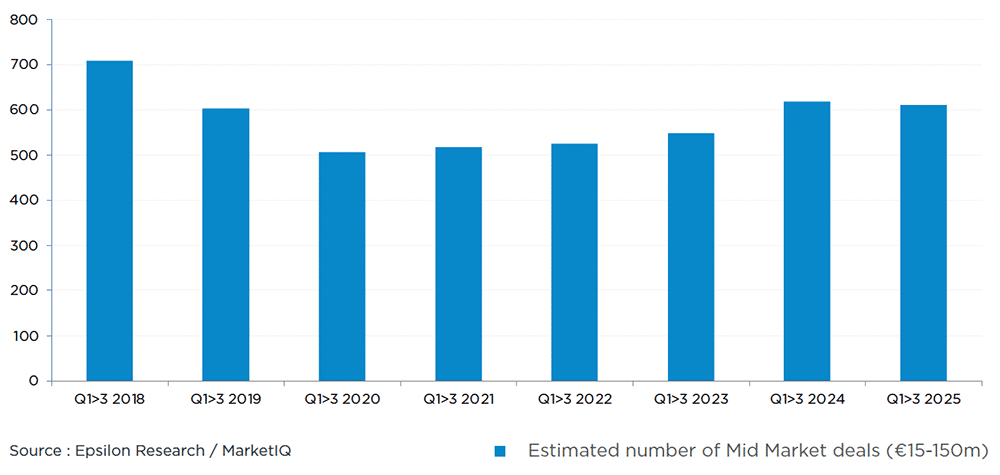
The Euro zone mid-market M&A began to recover in Q2 2025 (updated data) after the Q1 dip and then stabilized in Q3 versus Q2. Over the first three quarters of 2025, the mid-market activity was broadly flat vs. 2024 and 20% above the 2020–2023 level: Europe is lagging the gradual global M&A recovery(1).
The euro area market benefited from improving fundamentals: macro stabilization with modest Q3 growth(2), inflation hovering near target (2.1–2.2%) and the ECB cutting its deposit rate to 2.0% in June following reductions in February and April.
That said, mixed economic signals, tariff related uncertainty, geopolitical risk, and domestic political instability (notably in France) continue to weigh on a clear rebound in M&A activity.
(1) Europe M&A deal value declined 5% to $375bn in the first nine months of 2025, while the global M&A activity grew 10% – source: Boston Consulting Group Global M&A Report in Reuters, 28.10.2025.
(2) In Q3 2025, seasonally adjusted GDP increased by 0.2% in the euro area compared with the previous quarter, according to a preliminary flash estimate published by Eurostat on 30.10.2025.
Eurozone mid-market activity (€15–500m) in volume (# deals) and value
Source : Argos Index© mid-market / Epsilon Research
Volume of mid-market deals in the euro area (number of transactions)
Investment fund activity declined in line with the broader M&A market. Their share(1) of mid-market M&A over the past six months remained stable at 15% in deal count, but remains at a high 30% in disclosed deal value.
(1) Does not include build-ups
Share of LBO in Eurozone Mid-market M&A